Sydney • Fort Denison
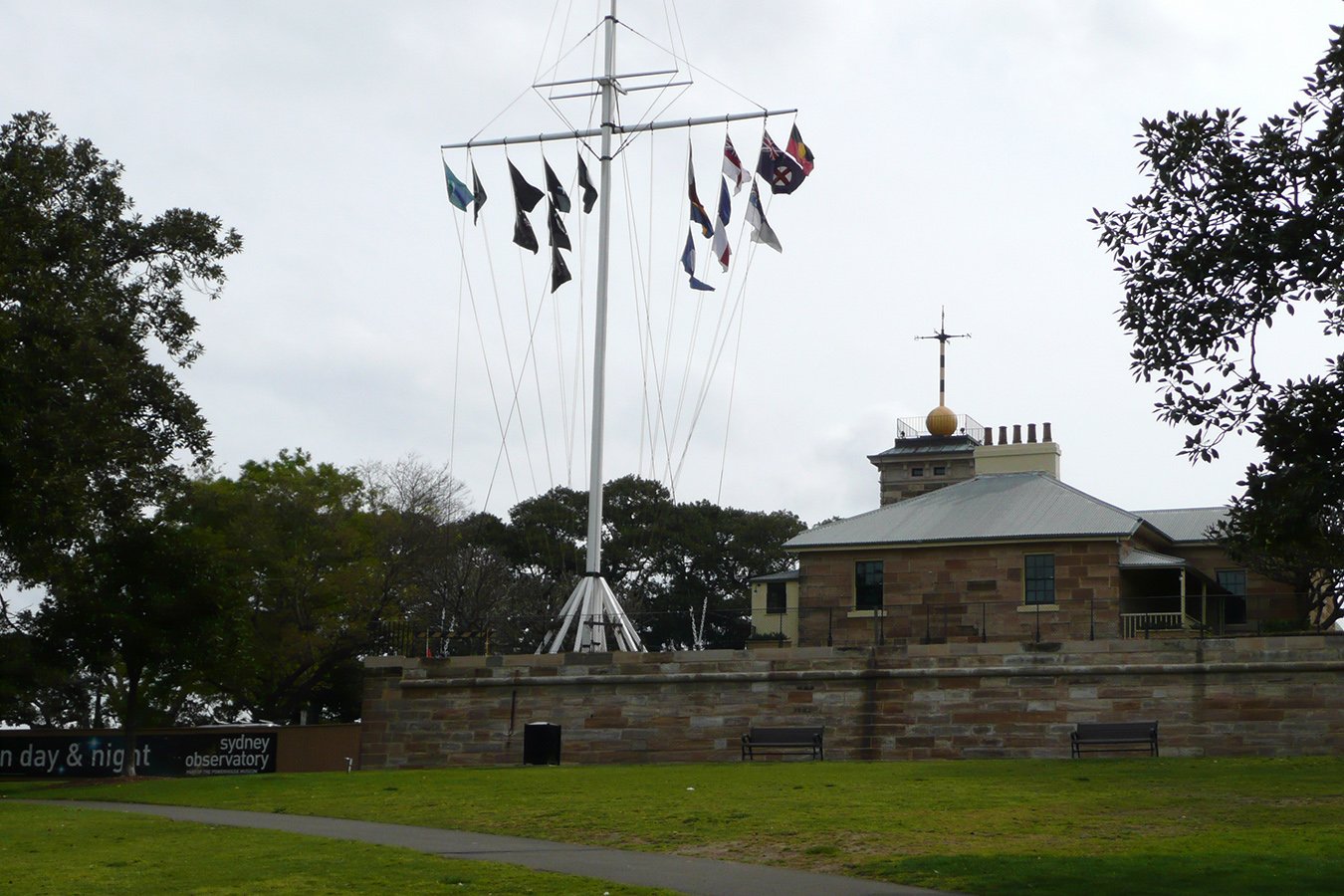

In the nineteenth century, accurate timekeeping was essential for maritime navigation. To allow ships' chronometers to be synchronized, many ports installed a so-called Time Ball. Shortly before 1:00 p.m., the ball was raised to the top of a mast and then dropped precisely at 1:00 p.m. Sailors could use the moment of its descent to check their chronometers, enabling more accurate determination of longitude at sea. The Sydney Time Ball is one of the few remaining examples in the world that is still operated daily.
Location
State / Territory:New South Wales
Local Government Area:City of Sydney
Suburb / Locality: Fort Denison
Street: Mrs Macquaries Road, Botanic Gardens
Postal Code and House Number:NSW 2000 - 1003
Locality Sequence Number:3
Built:1859
Lasted Observ:2010-09-19
Inscription:N/A